Get a FREE Quote Call Us

Search

If you cant find what you’re after please don’t hesitate to contact us.

Select Region

Please select the global region website you'd like to view.

Asia
Japan

Get a FREE Quote

Submit your enquiry using the online form with a brief description of the issue. A Mainmark expert will be in touch within 24–48 hours (excluding weekends and public holidays).

After clicking Submit, you’ll receive an email with the next steps—please check your inbox and spam folder.

Hidden
Photos or reports of issues (optional)
Drop files here or
Max. file size: 16 MB.
    Consent
    This field is for validation purposes and should be left unchanged.

    Cracked Wall Repair Adelaide

    Fixing Structural Cracks Caused by Subsidence, Foundation Movement & Ground Instability Across South Australia

    Seeing cracks in your walls?


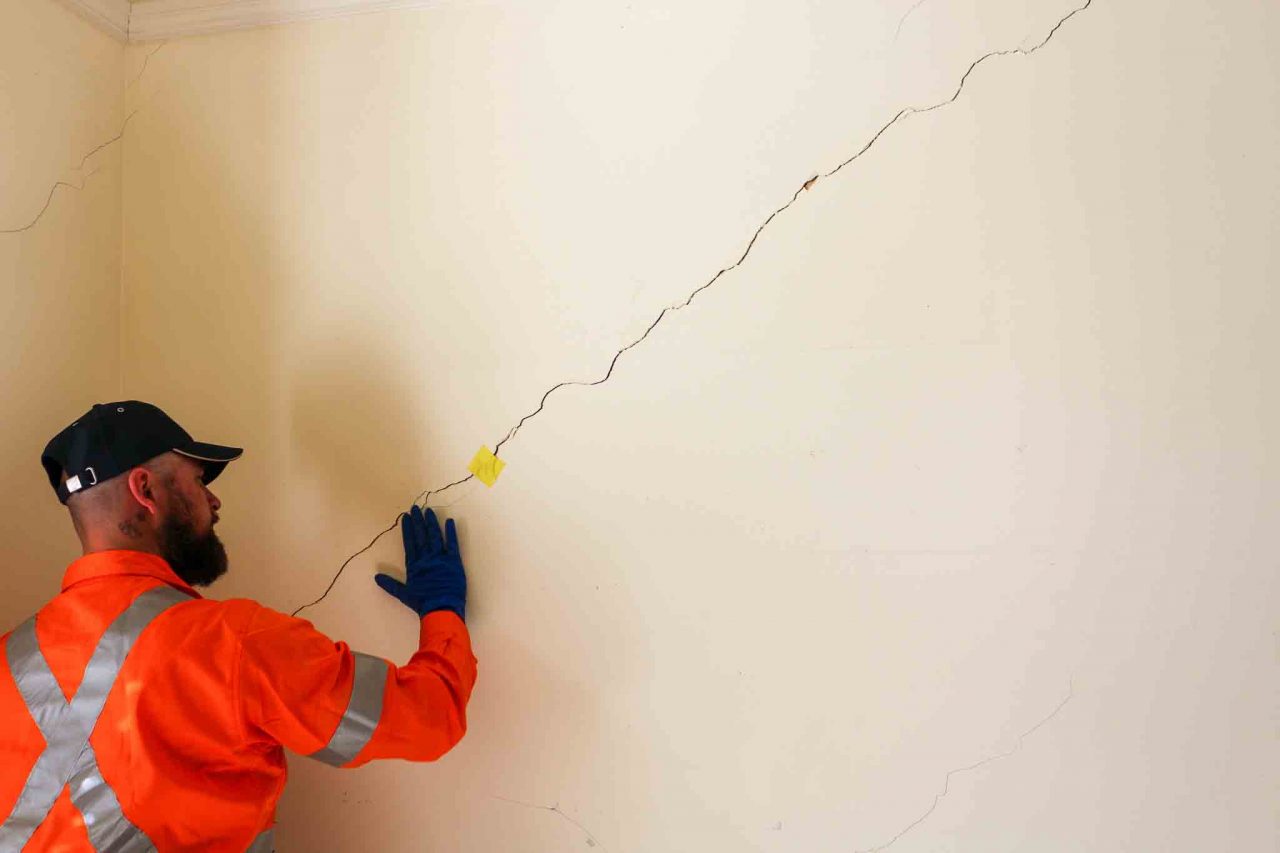
    If you’re spotting diagonal cracks in brickwork, internal plaster cracks, gaps around windows and doors, or stepped cracks in your Adelaide home, these are common indicators of subsidence and foundation movement,  issues frequently seen across South Australia’s reactive clay soils, dry climate, and shifting ground conditions.


    And they’re almost never “just cosmetic”.


    These cracks are your home signalling that the soil beneath it is moving,  a known problem across Adelaide’s northern suburbs, eastern hills face, western coastal belt, and older homes in the Inner Metro, where soil shrink-swell cycles and ageing drainage systems are common.


    Mainmark is South Australia’s leading specialist in cracked wall repair, stabilising homes affected by sinking foundations, settlement, voiding, erosion, and ground movement, all without excavation, without demolition, and often completed in a single day.

    Hidden
    Consent
    This field is for validation purposes and should be left unchanged.

    Cracked Walls

    The #1 Reason Walls Crack: Foundation Movement

    When the soil beneath your home shifts, sinks, shrinks, or swells, the foundation loses support. The structure then twists, drops, or settles unevenly,  creating the cracks you can see, and usually many more you can’t.

    Common ground movement causes include:

    • Subsidence from shrinking clay soils or drought
    • Foundation settlement on poorly compacted soil
    • Heavy rain + reactive soils causing sudden movement
    • Tree roots extract moisture from the ground
    • Leaking pipes washing away soil
    • Void formation beneath the slab or footings
    • Ageing foundations on older homes
    • New extensions that stress old foundations

    These forces cause structural wall cracking, not the harmless “hairline cracks”.

    Cracks that Need Immediate Investigation

    The Types of Cracks That Signal a Serious Problem

    • Diagonal/stepped cracks in brickwork
    • Cracks wider than 5mm

    • Horizontal cracks (especially long ones)

    • Cracks extending from corners of windows or doors

    • Multiple cracks appearing suddenly

    • Bulging or bowing walls

    • Gaps between walls, floors or ceilings

    • Rooms going out of level or floors sloping

    If you’re Googling these symptoms, your home may be actively moving.

    Types of Wall Cracks We Repair

    Cracks can appear for many different reasons, but the most common cause is movement in the ground or foundation. Whether you’re seeing cracks in brickwork, plaster, corners, or around windows and doors, these are often early warning signs that the structure is shifting, sinking, or losing support.

    At Mainmark, we identify the type of crack, diagnose the source of the movement, and deliver fast, non-invasive solutions to stabilise your home and prevent further damage. Below are the most common wall cracks we repair across homes affected by subsidence, settlement, ground instability, voiding, and foundation movement.

    Cracked Brick Walls

    Cracks in brickwork, especially zig-zag or stepped patterns,  are one of the most common signs of foundation movement. These cracks often form where the home has sunk or settled unevenly. We stabilise the foundation beneath the brickwork, re-level affected areas, and prevent further cracking.

    Stepped / Diagonal Cracks

    Stepped cracks in mortar joints typically indicate subsidence, soil shrinkage, or differential settlement. Diagonal cracks running from window or door corners also show the structure is under stress. We treat the cause by strengthening the ground and re-supporting the footing.

    Internal Gyprock or Plaster Cracks

    Internal cracks in plasterboard or gyprock , especially long diagonal cracks, cracks around cornices, or horizontal splits across walls,  often appear when the building shifts or drops. Our ground engineering solutions stabilise the structure so internal cracks stop growing and can be repaired permanently.

    Vertical Foundation Cracks

    Vertical cracks in external walls, retaining walls, or masonry can point to downward movement in one section of the foundation. These are not cosmetic,  they usually reflect settlement. We diagnose the affected area and use targeted resin injection to re-establish support.

    Horizontal Cracks Under Windows

    Horizontal cracks under window sills or above lintels are usually caused by uneven load distribution or foundation drop beneath a structural element. These cracks often widen over time. We re-support the foundation beneath the affected wall to restore load balance.

    Gaps in Cornices or Skirting

    If cornices separate from the ceiling or skirting boards pull away from the floor, the structure is moving. These gaps typically appear when floors are sinking or when walls are no longer plumb. Our re-levelling solutions return the home to a stable, uniform position.

    Cracks Caused by Subsidence or Settlement

    Subsidence-related cracks usually become wider, longer, and more severe over time. They may start small but grow as the ground continues to drop. We stop the movement by strengthening the ground, filling voids, and restoring support beneath footings and slabs.

    Cracks Around Windows, Doors, and Corners

    Cracks radiating from window frames, doorways, or corners are classic signs of structural distortion. When the building shifts, these openings act as weak points where cracking begins. Stabilising and lifting the foundation often helps straighten frames and reduces cracking.

    Cracks from Voiding or Washout Beneath Slabs

    When soil is washed away by broken pipes, poor drainage, or erosion, voids form beneath slabs or strip footings. This leads to sudden settlement and rapid cracking. Our Teretek® resin injection fills these voids, compacts the soil, and restores lost ground support.

    Cracked Wall Repairs

    Before & After Treatment

    Trusted by over 30,000 Homeowners

    See the incredible difference in homes affected by subsidence issues in our “Before & After” showcase. Cracks in walls, both internal and external, often indicate the need for foundation re-levelling. Mainmark’s innovative and non-invasive solutions can quickly raise, re-level, and re-support your home, all with minimal disruption.

    *Results may vary depending on site conditions, ground behaviour and specific requirements of each project.

    Fix Structural Cracks

    Why Homeowners Choose Mainmark

    Fast

    Our technologies have fast curing times and treated areas can be used immediately or without the delays compared to traditional repair methods.

    Environmentally Inert

    Our technologies use an inert material that is non-toxic and does not leach into the environment or affect the treated area.

    Non-Invasive

    Our solutions are of surgical nature compared to traditional methods.

    Cost-Effective

    Compared to traditional methods, our solutions are more cost-effective, with minimal disruption to the area.

    Cracked Wall Repair Cost

    Cost of Cracked Wall Repair

    Most cracked wall projects cost significantly less than traditional underpinning or reconstruction.

    Pricing depends on:

    • Foundation type

    • Soil conditions

    • Lift required

    • Size of affected area

    • Severity of cracks

    We provide a detailed, on-site assessment before any work begins.

    Cracked Wall Repair FAQs: Answers to the Most Common Questions
    How do I know if wall cracks are structural or just cosmetic?

    Hairline cracks under 1–2mm are often cosmetic, caused by temperature or minor shrinkage. Larger cracks, especially diagonal, stepped, or widening cracks,  are usually structural and linked to subsidence or foundation movement.

    When should I worry about cracks in my walls?

    You should seek professional help if cracks:

    • Are wider than 5mm

    • Spread quickly

    • Form a zig-zag or stepped pattern

    • Are linked with sloping floors or sticking doors

    • Appear around windows and door frames

    These usually signal active ground movement.

    Do cracks mean my house has subsidence?

    Not always, but subsidence is one of the most common causes of progressive cracking. A professional assessment can determine if the ground has dropped, shrunk, or lost support.

    What are the early warning signs of foundation movement?

    Common early symptoms include:

    • Hairline cracks that widen over time

    • Gaps forming in cornices or skirting

    • Uneven or sloping floors

    • Doors and windows jamming

    • Cracks appearing suddenly after heavy rain or drought

    Can cracked walls get worse over time?

    Yes. If movement continues, cracks typically widen, lengthen, and multiply. They never fix themselves and often accelerate after weather changes, drought, or rain events.

    Is it safe to live in a house with cracked walls?

    In most cases, yes, but any structural cracks or cracks caused by subsidence should be inspected. While rare, severe movement can compromise wall stability over time.

    Does resin injection actually fix cracked walls?

    Yes, resin injection stabilises the ground, re-levels sunken foundations, and stops further movement. It treats the cause of cracks, not just the crack itself.

    What is the best way to fix cracks caused by subsidence?

    The most effective solution is to stabilise the foundation using methods like Teretek® resin injection, which restores soil strength and re-levels the home. Only after stabilisation should cracks be repaired cosmetically.

    Can heavy rain or drought cause wall cracks?

    Absolutely. Reactive clay soils expand during wet periods and shrink in drought, causing homes to lift, twist, or sink,  leading to cracking both inside and outside the home.

    How long does cracked wall repair take?

    Most resin injection and re-levelling projects take just a few hours. Larger homes or severely affected areas may take a full day.

    Is resin injection a permanent solution?

    Yes,  it is designed to be long-lasting. Once the ground is stabilised and compacted, the foundation regains uniform support.

    How much does cracked wall repair cost?

    Costs vary based on the severity of movement, foundation type, soil conditions, and the amount of lifting required. Mainmark provides a detailed assessment before quoting.

    Can you lift a home with cracked walls?

    Yes. Stabilising and lifting the home can often close or reduce the cracks significantly, especially if the movement occurred in a concentrated area.

    Do cracks always mean the house is sinking?

    No. Some cracks form from minor shrinkage or temperature changes. But significant cracks — diagonal, stepped, widening, or repeated cracks — usually point to sinking or unstable ground.

    Mainmark

    © 2026 The Mainmark group of companies. ‘Mainmark®’, ‘Terefil®’, ‘Terefirm®’ and ‘Teretek®’ are trademarks of the Mainmark group of companies.

    Mainmark Ground Engineering Pty Ltd
    ABN: 51 606 182 503

    ISO 9001
    ISO 14001
    ISO 45001

    Solutions

    Ground Improvement

    Subsidence Repair

    Re-Levelling

    Void Filling

    Slab Lifting

    Crack Wall Repair

    Sinking Floors

    Sinking Foundation Repair

    Underpinning Repairs

    Locations

    Adelaide

    Brisbane

    Canberra

    Hobart

    Melbourne

    New South Wales

    Perth

    Queensland

    South Australia

    Sydney

    Tasmania

    Townsville

    Victoria

    Western Australia

    Sectors

    Commercial

    Residential

    Infrastructure

    Mining

    Technologies

    Teretek®

    Terefil®

    JOG

    About Us

    Our team

    Careers

    Media & Press

    News

    Awards

    Contact

    Locations
    Mainmark Sydney

    Level 7/124 Walker Street, North Sydney NSW 2060


    Mainmark Melbourne

    Unit 8, 33 Rosalie Street, Springvale VIC 3171

    Mainmark South Australia

    19 Heath St, Lonsdale SA 5160

    Mainmark Queensland

    20 Computer Road, Yatala QLD 4207

    Mainmark Perth

    115 Excellence Dr, Wangara WA 6065

    Mainmark Tasmania

     4/11 McRorie Court Cambridge TAS 7170

    Privacy Policy

    Terms and Conditions

    Created by Codex

    YouTube
    Facebook
    LinkedIn
    Instagram